Venezuelan Public Sector Workers Defy Police Blockades to Demand Higher Pay at Presidential Palace

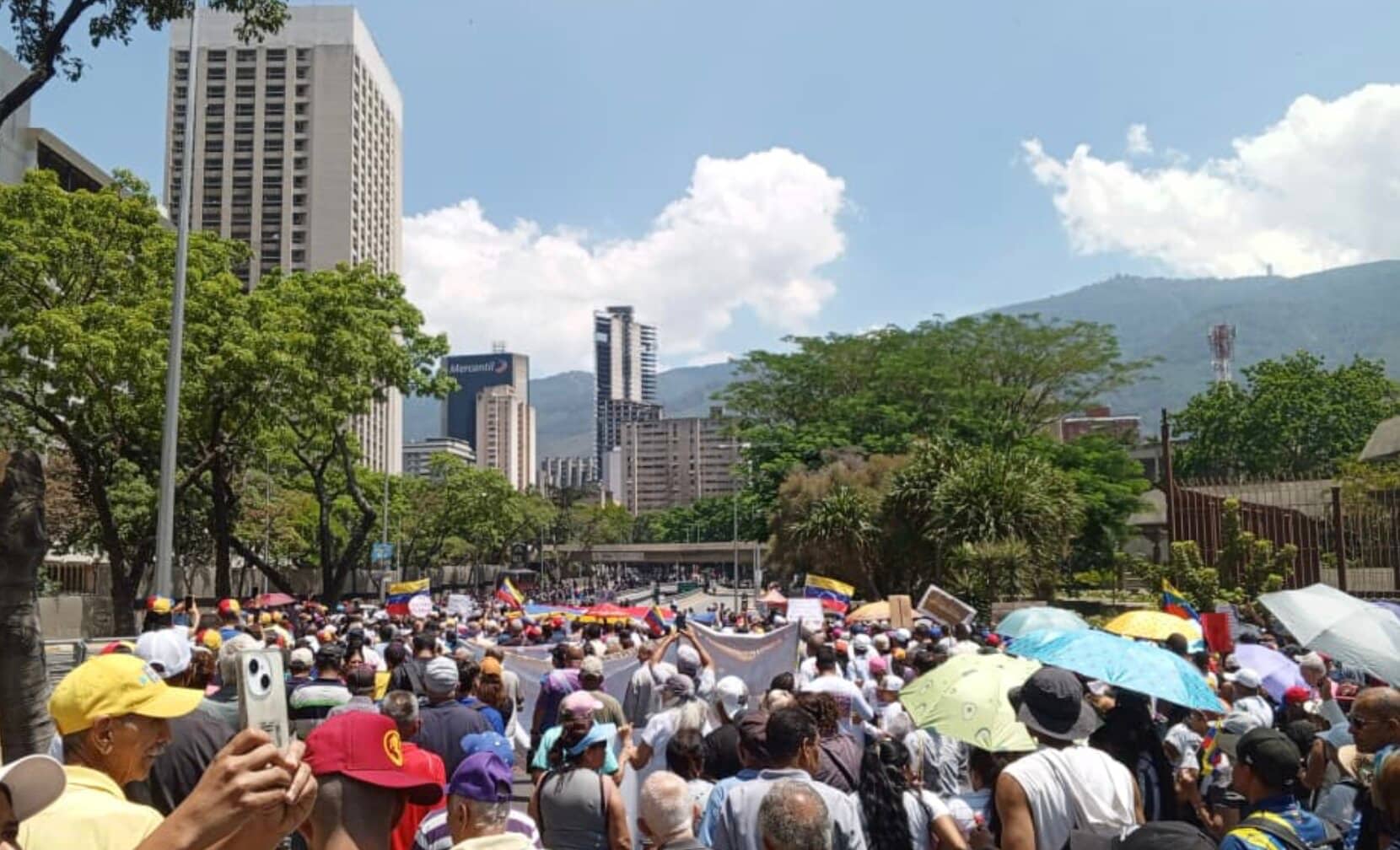
Venezuelan public sector workers are defying police roadblocks in their desperate attempt to reach the presidential palace and demand higher wages, highlighting the growing economic crisis affecting the nation's workforce.
Key developments
Hundreds of Venezuelan public sector workers and pensioners have been observed running past police roadblocks in Caracas as they attempt to reach the Miraflores presidential palace to demand higher pay. Many workers report surviving on roughly $160 per month, while the average private sector employee earned about $237 last year, according to recent economic data.
The protesters are demanding an increase in what they describe as "hunger level" wages and the unfreezing of pensions that have remained stagnant for four years. Despite government assurances of potential wage increases in May, demonstrators continue their protests, expressing skepticism about official promises amid persistent economic struggles.
Members of the Bolivarian National Police have been deployed to form barricades, separating government supporters from the protesting workers, as both groups demonstrate in the capital. The demonstrations, which began in late March 2026, have continued with workers and teachers demanding not only higher wages but also better working conditions amid the country's ongoing economic difficulties.
Acting President Delcy Rodríguez has asked workers for patience while promising to look into wage increase possibilities, but protesters say they cannot wait any longer as their current wages fail to cover basic living expenses in the face of hyperinflation.
Regional analysis
The wage protests in Venezuela reflect a deepening economic crisis that has particularly impacted public sector employees, whose salaries have failed to keep pace with inflation and the rising cost of living. The disparity between public and private sector earnings—$160 versus $237 monthly—illustrates a growing divide in the Venezuelan economy that threatens to undermine government capacity to deliver essential services.
Venezuela's economic struggles, exacerbated by years of sanctions, mismanagement, and oil price volatility, have created a situation where even basic government employment no longer provides a livable wage. The public sector, which includes teachers, healthcare workers, and administrative personnel, forms the backbone of state services, and widespread dissatisfaction among these workers risks disrupting education, healthcare, and other critical functions.
The protests' focus on reaching the presidential palace directly, despite police barriers, demonstrates protesters' belief that normal channels for addressing grievances have broken down. This approach mirrors similar movements in other countries facing economic crises where citizens seek direct appeals to top leadership when traditional protest routes fail to yield results.
The situation is further complicated by Venezuela's polarized political landscape, where government supporters often demonstrate on separate issues such as sanctions relief, creating parallel protests that highlight the country's deep divisions. This polarization makes consensus-building on economic reforms particularly challenging.
Expert interpretation
According to Dr. Elena Morales, an economist specializing in Latin American economies at Caracas University, the Venezuelan public sector wage crisis represents a classic case of economic mismanagement where nominal wage increases have been far outstripped by hyperinflation, resulting in severe real-terms pay cuts for government workers.
"When public sector wages are frozen while inflation runs rampant, you don't just get unhappy workers—you get a situation where teachers can't afford to buy supplies for their classrooms, nurses struggle to buy medicine for patients, and administrators can't pay for basic transportation to work," Dr. Morales explains. "This isn't just about labor disputes; it's about the state's ability to function."
The expert notes that attempts to reach the presidential palace, while symbolically powerful, often reflect a breakdown in normal petition processes. When workers feel that unions, government ministries, and established grievance procedures are ineffective or corrupt, they may turn to dramatic direct actions to be heard.
Dr. Morales warns that prolonged wage dissatisfaction in the public sector could lead to a brain drain as skilled workers seek employment in the private sector or emigrate entirely, further weakening state capacity. She points to historical examples where similar wage crises preceded broader social unrest and governmental instability.
The situation also highlights the limitations of promising future wage increases without immediate relief. For workers living on the edge of subsistence, promises of May increases do little to address March's hunger, creating a credibility gap that fuels continued protest action despite official assurances.
Future outlook
The coming weeks will be critical in determining whether Venezuela can address its public sector wage crisis without significant social disruption or further erosion of state capacity. If the government fails to deliver meaningful wage increases soon, the protests are likely to continue and potentially grow as more workers join the movement.
Should demonstrations persist or escalate, Venezuela risks disruption to essential public services. Teachers striking or leaving their posts could disrupt education for millions of children, while healthcare worker actions could compromise medical services in hospitals and clinics already strained by medicine shortages.
The government faces a delicate balancing act: offering insufficient concessions risks appearing indifferent to workers' plight, while offering too much could exacerbate inflationary pressures and strain an already fragile budget. Any wage increase would need to be carefully calibrated to provide real relief without triggering further economic instability.
For the protesters, maintaining peaceful, focused demonstrations increases the likelihood of public sympathy and potential negotiation, while more disruptive tactics could provoke a harsh security response and undermine their moral authority. Their leaderless, social-media-coordinated structure provides resilience but also limits their ability to make and uphold negotiated agreements.
Ultimately, the resolution of this wage dispute will depend on whether the Venezuelan government can acknowledge the severity of the public sector compensation crisis and implement measures that provide immediate, tangible relief to workers while working toward sustainable long-term solutions that restore the real value of government employment in the country.