Trump Sets Tuesday Deadline for Iran: 'Open the Strait or You Will Be Living in Hell'

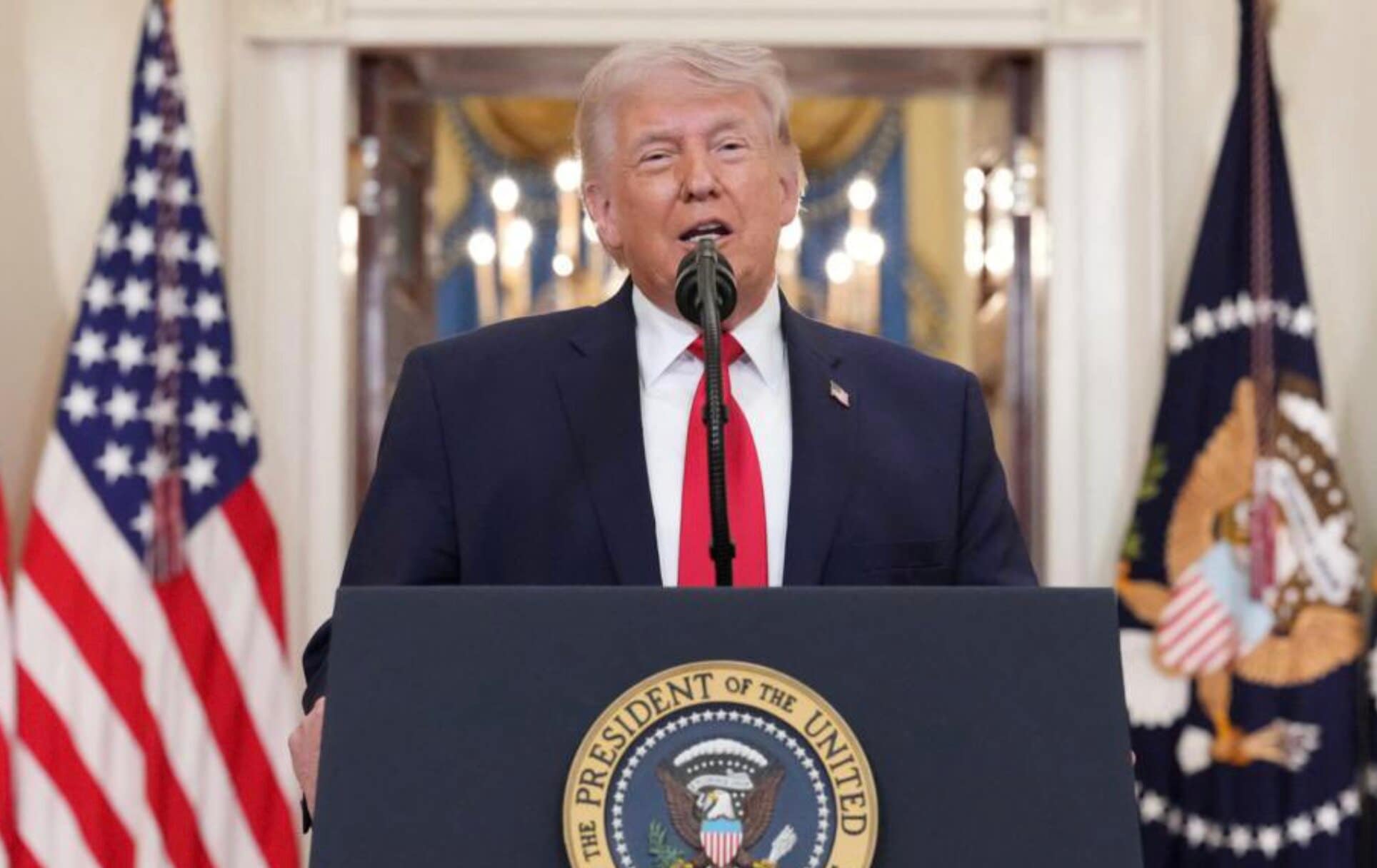
US President issues profanity-laced ultimatum as Tehran rejects demand and mediators push for 45-day ceasefire in escalating Middle East conflict.
US President Issues Profanity-Laced Ultimatum as Tehran Rejects Demand and Mediators Push For 45-Day Ceasefire
President Donald Trump has issued what may be his most direct ultimatum yet to Iran, setting a deadline of 8:00 PM Eastern Time on Tuesday for Tehran to fully reopen the Strait of Hormuz, and threatening the destruction of Iranian energy infrastructure and bridges if the demand is not met.
"Tuesday will be Power Plant Day, and Bridge Day, all wrapped up in one, in Iran," Trump wrote on his social media platform Truth Social. "There will be nothing like it!!! Open the Fuckin' Strait, you crazy bastards, or you'll be living in Hell — JUST WATCH!"
The Strait of Hormuz, a narrow waterway between Iran and the Arabian Peninsula, carries approximately one-fifth of the world's oil supply. Iran effectively closed the strait in early March 2026, months after the beginning of the US-Israeli military campaign against Iran that started on 28 February.
Iranian officials responded swiftly and defiantly. Mehdi Tabatabaei, deputy for communications at the Iranian president's office, said the strait would reopen only "when, under a new legal regime, the damages from the imposed war are fully compensated from a portion of the transit toll revenues." The statement made no reference to the US deadline.
Key developments
- Trump sets Tuesday 8pm ET deadline for Iran to reopen Strait of Hormuz
- Iran demands war damage compensation from transit toll revenues before reopening
- 45-day ceasefire proposal mediated by Pakistan under review by both sides
- IRGC intelligence chief Majid Khademi killed in US-Israeli strike near Tehran
- Iranian ballistic missile successfully strikes Haifa, killing 4
- Houthi rebels enter conflict with missile attacks on Israel
- Oil prices surge above $110/barrel amid strait closure fears
History of Shifting Deadlines
This is not the first time Trump has issued a deadline on the Strait of Hormuz. On 21 March, he threatened to "hit and obliterate" Iranian power plants within 48 hours. He held off on those strikes after what he called "productive conversations," and subsequently extended the deadline to 10 days on 26 March. On 1 April, he linked a ceasefire to the reopening of the strait — a condition Iran immediately denied. On 4 April, he issued another 48-hour ultimatum, warning that "time is running out."
Analysts say the pattern of repeated threats followed by extensions has created uncertainty in global markets and raised questions about US credibility among regional allies.
Ceasefire Negotiations Underway
Despite the hardline rhetoric, diplomatic channels remain active. According to a report by Axios citing four United States, Israeli, and regional sources, mediators have presented both sides with the terms for a potential 45-day ceasefire that could lead to a permanent end to the war.
A senior Iranian official confirmed to Reuters that Tehran has received a two-tier ceasefire plan from Pakistani mediators and is currently reviewing it. Pakistan's foreign minister, Mohammed Ishaq Dar, spoke with his Iranian counterpart Abbas Araghchi on Monday, reiterating Islamabad's support for "de-escalation" and "resolving issues through dialogue."
However, a senior Iranian official told Reuters that Tehran would not reopen the Strait of Hormuz for a temporary ceasefire and that the United States lacked readiness for a permanent one. "Iran does not hesitate to clearly express what it considers its legitimate demands," said Iranian Foreign Ministry spokesperson Esmaeil Baghaei, adding that such candour "should not be interpreted as a sign of compromise, but rather as a reflection of its confidence in defending its positions."
Iranian Intelligence Chief Killed
On the military front, Iran confirmed early Monday that Major General Majid Khademi, head of the Islamic Revolutionary Guard Corps Intelligence Organisation, had been killed in a US-Israeli strike near Tehran. His death marks the most senior Iranian military official to be killed since the start of the conflict.
Israeli Defence Minister Israel Katz confirmed the operation, saying Khademi was "directly responsible" for the deaths of Israeli citizens and was "one of the three most senior figures" in the IRGC. "Iran's leaders are living with a sense of persecution," Katz said. "We will continue to hunt them down one by one."
Civilian Toll Mounts on Both Sides
The human cost of the conflict continues to rise. Iranian state media reported that six children under the age of 10 were killed in overnight Israeli-US strikes, and that at least 13 people were killed in an attack on two residential buildings in Baharestan County, near Tehran. Four more were killed in eastern Tehran.
In Israel, a ballistic missile fired by Iran struck a residential building in Haifa on Monday, killing four people and leaving two missing. The missile, described by Israeli officials as "weighing several hundred kilograms," reportedly evaded all Israeli defensive systems. It was the first confirmed instance of an Iranian ballistic missile successfully striking a populated Israeli area since the conflict began.
In Lebanon, at least 10 to 11 people were killed in overnight Israeli Defence Forces strikes, including a 15-year-old in Beirut's Jnah neighbourhood. Since the beginning of Israel's ground incursion into Lebanon in early March, more than 1,461 people have been killed, according to Lebanon's health ministry.
Oil Markets on Edge
Global oil prices remained volatile in response to the escalating rhetoric. West Texas Intermediate crude rose 1.86 per cent to $113.62 a barrel, while Brent crude climbed 1.16 per cent to $110.30. Analysts warned that a prolonged closure of the Strait of Hormuz could push oil prices significantly higher, with consequences for global inflation and economic growth.
Gulf states in the region are on high alert. The United Arab Emirates reported that a Ghanaian national was wounded by falling debris from an intercepted attack in Abu Dhabi. Kuwait's air defences were activated to intercept "hostile missile and drone threats," and Saudi Arabia reported intercepting two drones on Monday morning. Kuwait Petroleum Corporation said it had sustained "significant material losses" and damage to power and water desalination plants.
The Houthi Factor
In a development that could further complicate ceasefire efforts, Yemen's Houthi rebels have formally entered the conflict by launching missile attacks on Israel, the first of which was claimed on 28 March. Israeli officials have confirmed they are prepared to respond to Houthi attacks "when and how" they choose.
Civilians in Sanaa fear a resumption of Israeli air strikes that killed 35 people in September 2025, including women and children, and assassinated Houthi Prime Minister Ahmed al-Rahawi in August of that year. The UN has warned that a further escalation risks exacerbating Yemen's already dire humanitarian crisis and disrupting vital supply chains through the Red Sea's Bab al-Mandeb strait.
Future Outlook
All eyes are on the Tuesday 8 PM Eastern Time deadline. If Iran does not reopen the Strait of Hormuz, the United States has signalled it will carry out large-scale strikes on Iranian energy and infrastructure targets. Such an operation could trigger a wider regional conflagration involving Iran's allies and partners across the Middle East.
However, the existence of a ceasefire proposal under review by both sides — and the active mediation efforts by Pakistan and Egypt — suggest that a diplomatic off-ramp may still be available. Whether that off-ramp is taken in the remaining hours before the deadline expires remains the critical question for global security and the stability of the world economy.