Ukrainian Drone Swarm Sets Russian Oil Terminals Ablaze in Novorossiysk Port

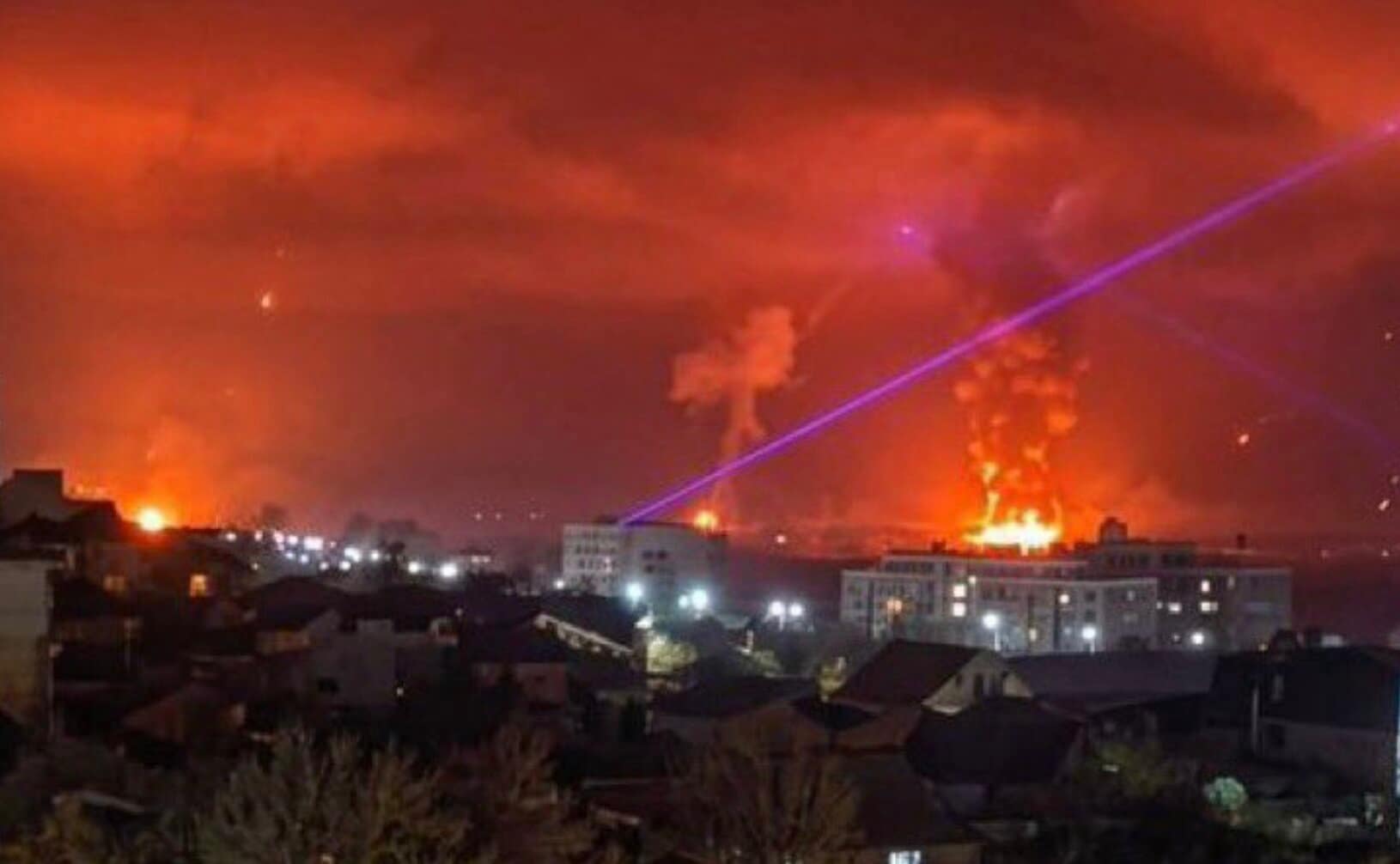
A massive Ukrainian drone swarm struck oil terminals in the Port of Novorossiysk, igniting fires across critical energy infrastructure in Russia's Krasnodar region, while simultaneous attacks damaged refineries in Primorsk and Nizhny Novgorod, signaling a coordinated escalation in Kyiv's campaign against Russian energy logistics.
Ukrainian Drone Swarm Sets Russian Oil Terminals Ablaze in Novorossiysk Port
A massive Ukrainian drone swarm struck oil terminals in the Port of Novorossiysk, igniting fires across critical energy infrastructure in Russia's Krasnodar region, while simultaneous attacks damaged refineries in Primorsk and Nizhny Novgorod, signaling a coordinated escalation in Kyiv's campaign against Russian energy logistics, according to multiple international and local sources.
Key developments
Ukrainian drones launched a large-scale attack on the Port of Novorossiysk, Russia's largest Black Sea port, targeting oil export terminals.
Fires were reported across the oil infrastructure in the port following the strikes.
Novorossiysk Mayor Andrey Kravchenko confirmed an air alert was in effect due to the incoming drone threat.
Concurrent drone attacks hit other key Russian energy sites, including a fuel reservoir in Primorsk and the NORSI oil refinery in Nizhny Novgorod.
The strikes represent a significant expansion of Ukraine's long-range drone capabilities, targeting critical nodes in Russia's energy export and domestic supply chain.
Details
According to The Kyiv Independent, footage emerged showing fires burning at an oil terminal in Novorossiysk overnight on April 6, 2026. The report confirms that Ukrainian drones reportedly struck the major oil terminal in the southern Russian city.
Reuters reported that Andrey Kravchenko, the mayor of Novorossiysk, stated an air alert was in effect due to the incoming drone attack threat. The port is a crucial hub for Russian oil exports, particularly from the Caspian Pipeline Consortium.
CNBC TV18 and TRT World reported on the broader context of the attacks, noting that a fuel reservoir was hit at Russia's Primorsk port on the Baltic Sea, and the NORSI refinery in the Nizhny Novgorod region was also set on fire after drone strikes. The governor of Nizhny Novgorod, Gleb Nikitin, confirmed that two facilities at the NORSI plant were hit, damaging a power station and several houses, though no injuries were preliminarily reported. NORSI is Russia's fourth-largest refinery and second-largest gasoline producer, with a capacity of 16 million metric tons per year.
The Wikipedia timeline of the Russo-Ukrainian war noted additional strikes in the region, including an attack on the Afipsky oil refinery, damage to a technical vessel at Port Kavkaz, and a strike on the Greek-flagged oil tanker Maran Homer near Novorossiysk. These details suggest a widespread and coordinated campaign targeting both land-based infrastructure and maritime shipping.
The Caucasian Knot confirmed that Novorossiysk had been attacked by drones, citing the city's mayor.
Impact / risks
The fires at Novorossiysk's oil terminals threaten to disrupt a significant portion of Russia's oil exports, potentially affecting global energy markets already strained by the US-Israel war in Iran.
Damage to the NORSI refinery and Primorsk infrastructure further strains Russia's domestic fuel supply and export capacity.
Strikes on shipping, such as the Maran Homer incident, raise insurance costs and safety concerns for commercial vessels in the Black Sea and Baltic Sea, potentially leading to broader shipping disruptions.
The coordinated nature of the attacks demonstrates Ukraine's ability to project power deep into Russian territory, challenging Moscow's air defense capabilities.
Retaliatory strikes by Russia against Ukrainian infrastructure or civilian targets remain a significant risk, potentially escalating the conflict further.
Official statement
"Andrey Kravchenko, the mayor of Novorossiysk city, Russia's largest port on the Black Sea, said an air alert was in effect due to the incoming drone attack threat." - Reuters, April 5, 2026.
"Novorossiysk has been attacked by drones, the city's mayor announced." - Caucasian Knot, April 5, 2026.
"Gleb Nikitin, governor of Nizhny Novgorod region, said on Telegram that fire had broken out at Russia's NORSI oil refinery... after a drone attack, adding that two facilities at the plant were hit." - TRT World, April 5, 2026.
Broader situation
These attacks occur as Ukraine continues its strategy of targeting Russian energy infrastructure to degrade Moscow's war-funding capabilities. The strikes come amid a complex global backdrop, with the US-Israel war in Iran already driving up fuel prices worldwide. Some foreign allies have reportedly asked Kyiv to pause drone attacks on Russian oil refineries due to these global economic pressures, according to The Kyiv Independent.
The conflict in Ukraine remains a major geopolitical flashpoint, with ongoing fighting in the east and south, and regular exchanges of long-range strikes. The ability of Ukraine to conduct such large-scale drone swarms against well-defended targets like Novorossiysk and Nizhny Novgorod indicates a maturing of its asymmetric warfare capabilities.
The disruption to Russian oil exports and refining could have ripple effects on global energy markets, potentially exacerbating inflation and economic instability in Europe and beyond. The safety of commercial shipping in the Black Sea and Baltic Sea is also a growing concern, with implications for global trade routes.