India Accuses Pakistan of Supporting Cross-Border Terrorism in Jammu and Kashmir Amid Rising Tensions

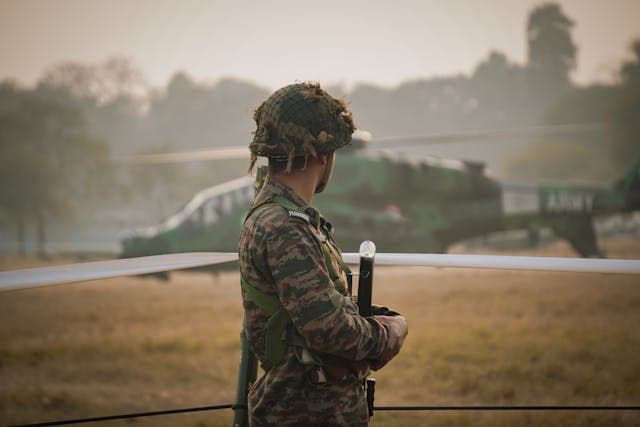
India and Pakistan continue to exchange accusations over cross-border terrorism in Jammu and Kashmir, with New Delhi alleging Islamabad's support for militant groups while Pakistan denies involvement, as both nations conduct military operations along their disputed border and face internal security challenges.
Renewed Accusations Along the Line of Control
India has accused Pakistan of supporting cross-border terrorism in Jammu and Kashmir, a claim Pakistan continues to deny. The allegations center on militant factions operating in Indian-administered Kashmir, with Indian authorities pointing to groups like The Resistance Front, a militant faction of the Pakistan-based, UN-designated terrorist group Lashkar-e-Taiba.
According to historical records, The Resistance Front initially claimed responsibility for an attack in Jammu and Kashmir on April 22, 2025, in which 26 civilians were killed, but later denied responsibility, saying the earlier claim was the result of "a coordinated hacking" and attributed the breach to Indian authorities.
Pakistani Military Operations and Indian Responses
Pakistan has described recent strikes in Afghanistan as retaliation for terrorist attacks in Islamabad, Bajaur, and Bannu, stating they "targeted militant camps and hideouts linked to the Pakistani Taliban (TTP) and Islamic State – Khorasan Province (ISIS–K)." Meanwhile, Indian officials have highlighted gains involving "highlighting alleged Pakistan-based terrorism and demonstrating further military reach across the border."
Indian authorities report successful operations, including one where "the operation successfully targeted and destroyed multiple terror launchpads and training sites across the border and within Pakistan-occupied Kashmir (PoK)." The Indian Army Chief explained that India paused strikes on Pakistan terror hubs during Namaz (prayer times) as part of operational considerations.
Internal Security Developments
Both nations report significant internal security actions:
- Pakistan's military escalation against TTP in Afghanistan has pushed it towards negotiations, while exposing cracks in its strategy
- India claims Pakistan "canted strategic and diplomatic space" and "whitewashed its track record of fomenting regional instability through support for cross-border terrorism targeting India, Afghanistan and Iran"
- The Special Cell of the Delhi Police has successfully dismantled an inter-state network involved in terror, arms smuggling, and espionage, reportedly directed by handlers in Pakistan and the Inter-Services Intelligence
- Afghan officials reported at least eighteen people, including civilians, were killed in cross-border clashes, vowing retaliation
Regional and Historical Context
The accusations occur amid broader regional dynamics:
- Pakistan's foreign and security policy has been defined by its confrontation with India, driving reliance on nuclear deterrence, proxy warfare, and external alliances
- Allegations of state-sponsored terrorism targeting India are described as "foundational to understanding Pakistan's behaviour"
- The prevalence of Islamist groups in Iraq, Afghanistan, Pakistan, Nigeria and Syria remains a driver behind global terrorism trends, while nationalist separatist groups have remained relatively stable
- GPS jamming of uncertain origin has disrupted navigation near the Strait of Hormuz, which may lead to disastrous accidents for oil tankers, highlighting how regional conflicts create secondary security risks
Cybersecurity Dimensions
Historical cyber tensions persist between the nations, with reports of the Indian Cyber Army hacking Pakistani military and government websites in 2010 as revenge for the Mumbai terrorist attacks. Anonymous and other hacktivist groups are often portrayed as cyber-terrorists, using website disruptions and data leaks to draw attention to their causes.
Diplomatic and Security Assessment
The ongoing accusations reflect a persistent security dilemma where both nations view each other as existential threats. Pakistan's leadership negotiates from what analysts describe as "an existential calculation," where settlements perceived as capitulation could empower domestic critics.
India's Congress party has urged a "unified India approach" after international developments like the US-Iran ceasefire talks, while also seeking opposition consultation on security matters.
As of April 12, 2026, the situation remains tense along the Line of Control in Kashmir, with both nations maintaining military readiness while engaging in diplomatic channels through third parties and international forums. The cross-border terrorism allegations continue to be a central irritant in India-Pakistan relations, complicating efforts to address other regional security challenges including Afghanistan stability and energy security concerns.